
Recent testing explored the integration of Rhino Banana, an AI-powered rendering plugin for Rhino, with a landscape model developed in RhinoLands. The results demonstrate how AI-based visualization can be effectively combined with BIM-oriented landscape workflows.
From RhinoLands Model to Render in a Minute
A detailed RhinoLands model—including terrain, planting, and hardscape elements—was used as the base geometry. By sending a Rhino viewport directly to Rhino Banana and applying a short text prompt, high-quality rendered images were generated in just a few minutes, without additional setup or material configuration.
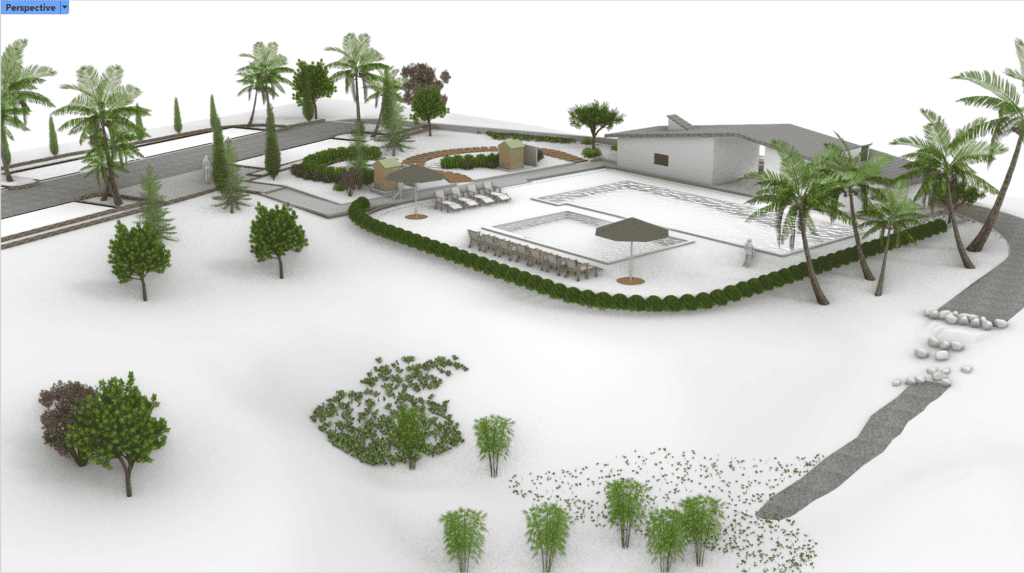
Geometry-Aware AI Rendering
One of the most notable outcomes is that Rhino Banana preserves the spatial logic and scale of the Rhino model. Vegetation masses, topography, and landscape elements are interpreted consistently with the original design, avoiding the common issue of AI tools overwriting or misrepresenting geometry.
This makes Rhino Banana particularly suitable for landscape architecture, where terrain continuity, planting structure, and spatial relationships are critical.
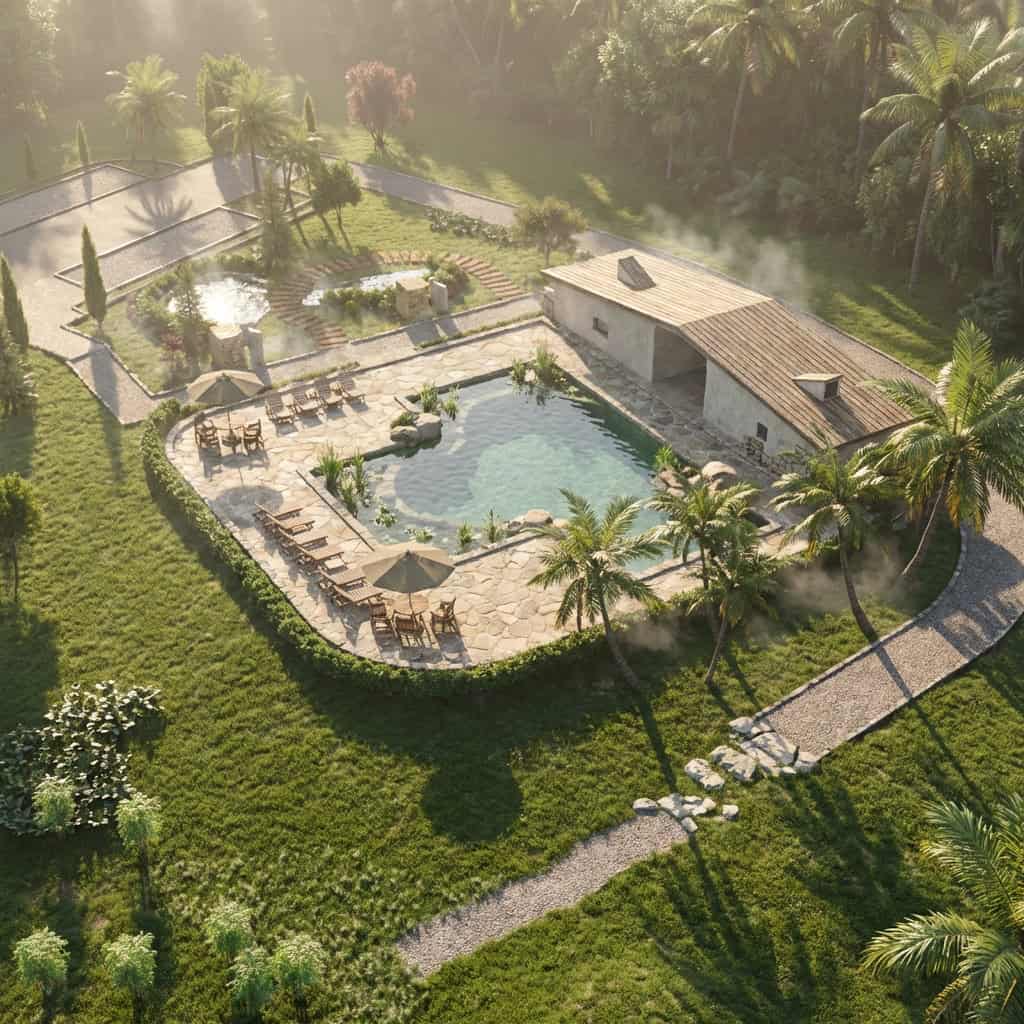
Value for RhinoLands Users
RhinoLands already provides advanced tools for:
- Landscape BIM modeling
- Terrain and surface management
- Planting design and documentation
By combining RhinoLands with Rhino Banana, designers can quickly produce presentation-ready visualizations directly from their BIM models—without exporting to external rendering software. This supports faster design iteration and clearer communication during early design phases and client reviews.
Conclusion
The Rhino Banana + RhinoLands workflow demonstrates how AI-assisted rendering can complement structured landscape modeling. It enables rapid visualization while maintaining design intent, making it a valuable addition to contemporary digital landscape architecture workflows.
